
The Byzantine Era of Furniture and the Women Who Influenced It
The time period classified as “Medieval” spans from 476 A.D. which saw the fall of Rome, to almost a millennia later in 1453. There was a lot of conflict and bloodshed over these years including William the Conqueror invading England, The Crusades, The Hundred Years War, then concluding with the capture of Constantinople in 1453 by the Turks. These periods of darkness were reflected in the art, architecture and furniture of the time, slowly breaking into the light of the Renaissance period.
As Constantinople was the capital of the Eastern Empire, a lot of affluent people were making the move and bringing with them their beloved possessions. This led to a blend of Eastern and Roman to form a new style that developed throughout the Byzantine era. Furniture design had started to lean away from the elegant and heavily sculptured Greek aesthetic, that was inspired and led by the human form and prioritisation of comfort, often utilising marble, bronze, as well as maple, cedar and oak. Byzantine pieces were deeply influenced by religious themes and imagery focusing more on flatter, 2 dimensional carvings in wood. These carvings were highly stylised, intricate and skilfully crafted, often including Christian depictions such as the virgin Mary.
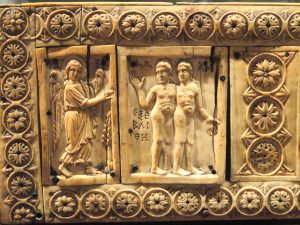
In a time where women were only just about being permitted to be seen publicly in carriages and still had a very long way to go in terms of women’s rights, many prominent buildings and furniture styles from this era were indisputably influenced by a number of specific notable female figures, as well as aspects of femininity in general.
One of the most significant women that influenced the styles of the Byzantine era was he Empress Theodora. Theodora was a former actress that was born around the year 500 who through an unprecedented turn of events, married Emperor Justinian. Theodora went on to co-rule the Byzantine / Eastern Empire for over 20 years. The story of Empress Theodora itself is fascinating and worth looking into for those with an interest in history, but to summarise, she had equal political powers to her husband and was able to create laws, command armies, and as she often did, execute political enemies! She was a ruthless leader, however she also introduced laws protecting women and vulnerable people that remained in place for centuries! Regarding furniture, art, and architecture, Empress Theodora dictated opulent, luxurious surroundings. This popularised the usage of gold, silver and ivory as well as quality silk furnishings. Empress Theodora was an influential figure in the rebuilding of the Hagia Sophia, that’s grand dome and breathtaking interior could warrant it’s own article.
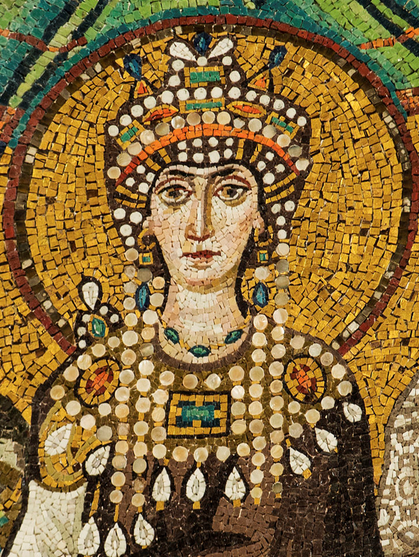
A mosaic depiction of Empress Theodora from Basilica of San Vitale.
https://www.medievalwomen.org/st-theodora-byzantine-empress.html
During the Reign of Empress Theodora and Emperor Justinian a prominent noblewoman, Anicia Juliana, who was a daughter of the Emperor of the West, used her immense wealth to build lavish churches like St. Polyeuctus in Constantinople, which included gold plated ceilings. It is said that she used her gold in architecture and furnishings as a loop hole from having to comply with Emperor Justinian’s demands for her gold.
Moving into the latter years of the Byzantine era, Isabella D’este, a powerful aristocrat, held furniture building and upholstery workshops for women attended by master woodworkers. The popularisation of women becoming skilled workers in these crafts further encouraged the inclusion of female influences in the designs, styles and décor of the time. Women commissioning heavy wooden chests for storage, portable pieces such as intricate wood carvings and micro mosaic diptychs shaped the aesthetic of domestic dwellings. The late-byzantine era as a result, featured a lot of furniture that consisted of minimal wooden framework allowing the soft furnishing and detailed, high quality fabrics and heavy drapery to take centre stage.
Unfortunately there are very limited authentic examples from this era due to the use of perishable fabrics and organic wooden materials, that most likely succumbed to rot in centuries of a humid Mediterranean climate, fires, and having their valuable adornments plundered and repurposed leaving the only trace of their existence in mosaics, illustrations and written records. Although much of the furniture of the Byzantine era has been lost to time, the legacy of these women and the cultural mark they have made remains as impressive today.