
Have you ever looked at a table or dresser and wondered, “Is this actually solid wood?”
Before we get into how to tell, let’s quickly explain what veneer actually is.
What Is Veneer?
Veneer is a thin layer of real wood that’s glued onto a core material like plywood, MDF, or another type of wood. It’s not fake, it is genuine wood it’s just not solid all the way through.
Veneer has been used for centuries in fine furniture making, many antique pieces feature beautiful veneer work to showcase rare or decorative grain patterns.
That said, veneer and solid wood behave differently — especially when it comes to refinishing and restoration.
Here’s how to spot the difference.
1. Check the Edges
Look closely at the edge of a tabletop or drawer front.
Solid wood will show continuous grain flowing naturally around the edge.
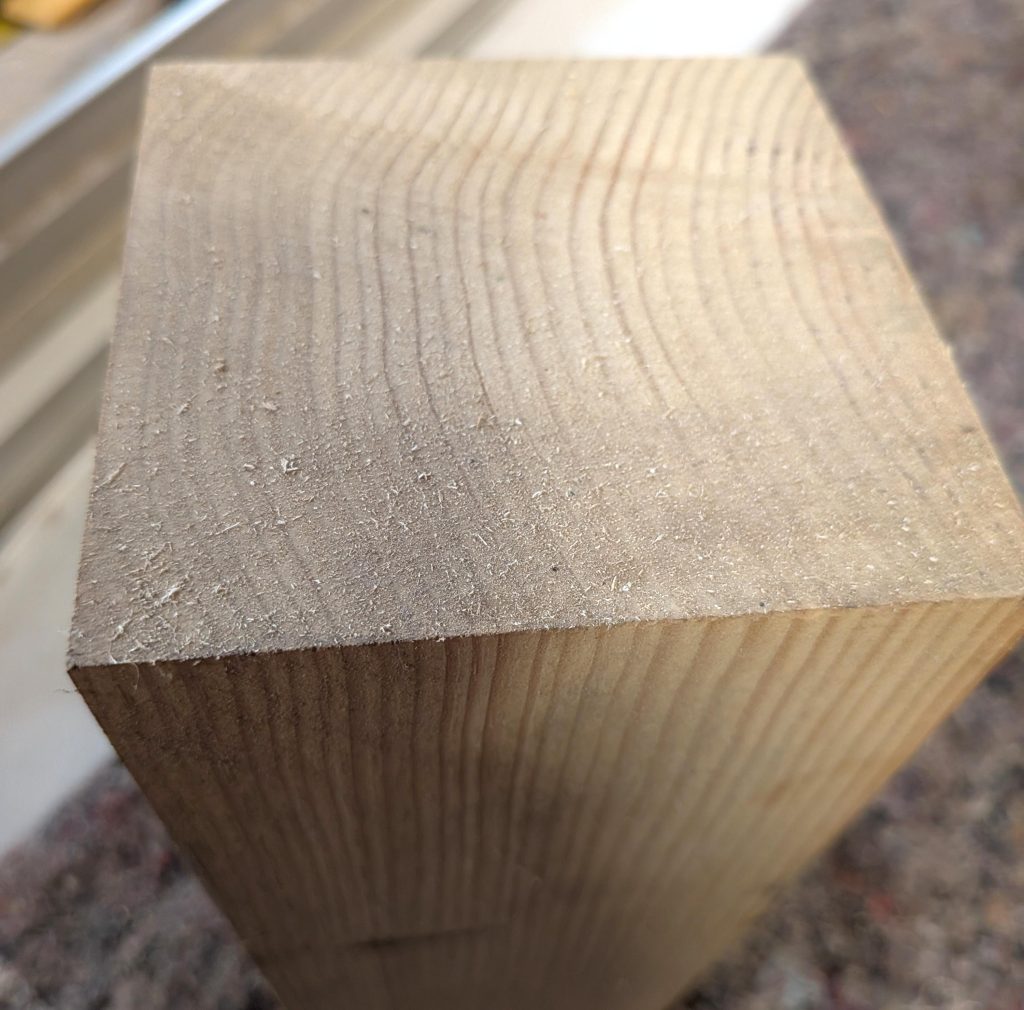
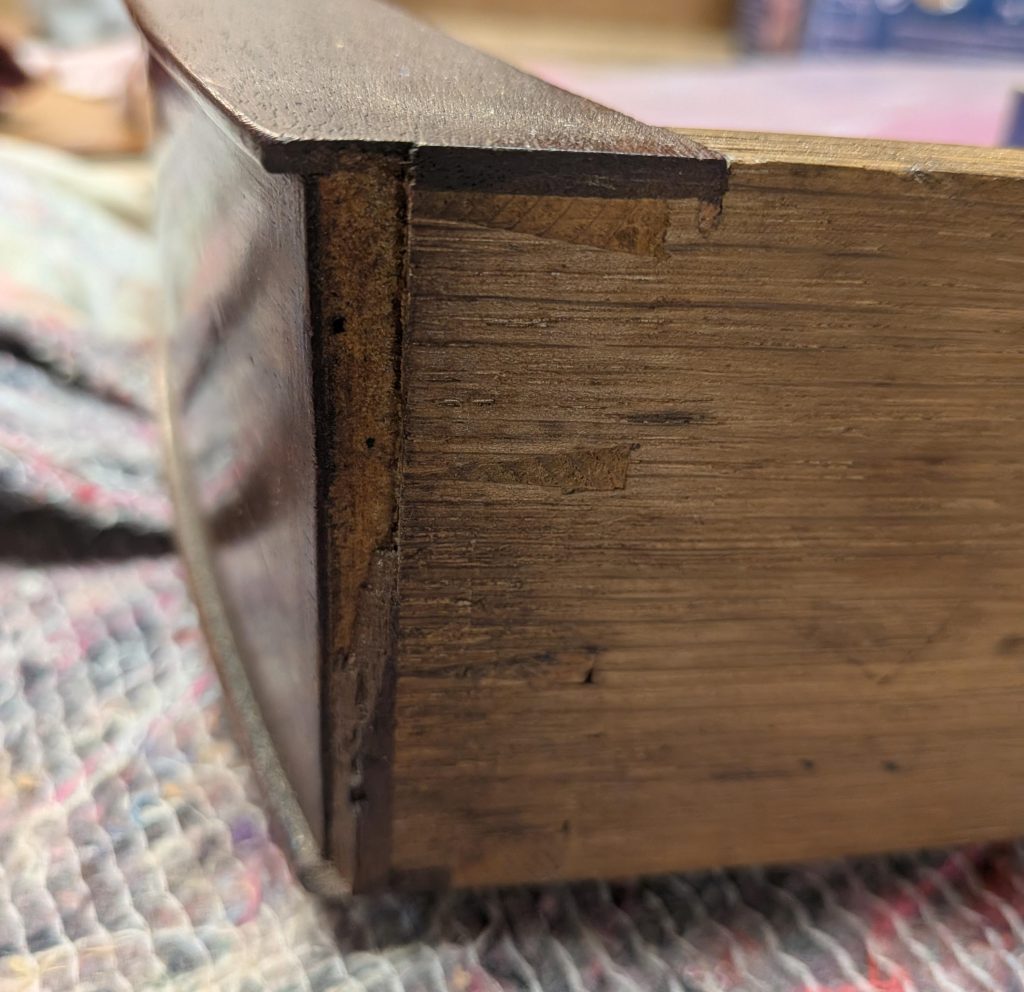
Veneer may reveal a thin seam where the surface layer meets the material underneath. If you see what looks like a thin sheet applied on top, you’re likely looking at veneer.
2. Look at the Grain
Wood grain should look natural, non symmetrical and slightly varied.
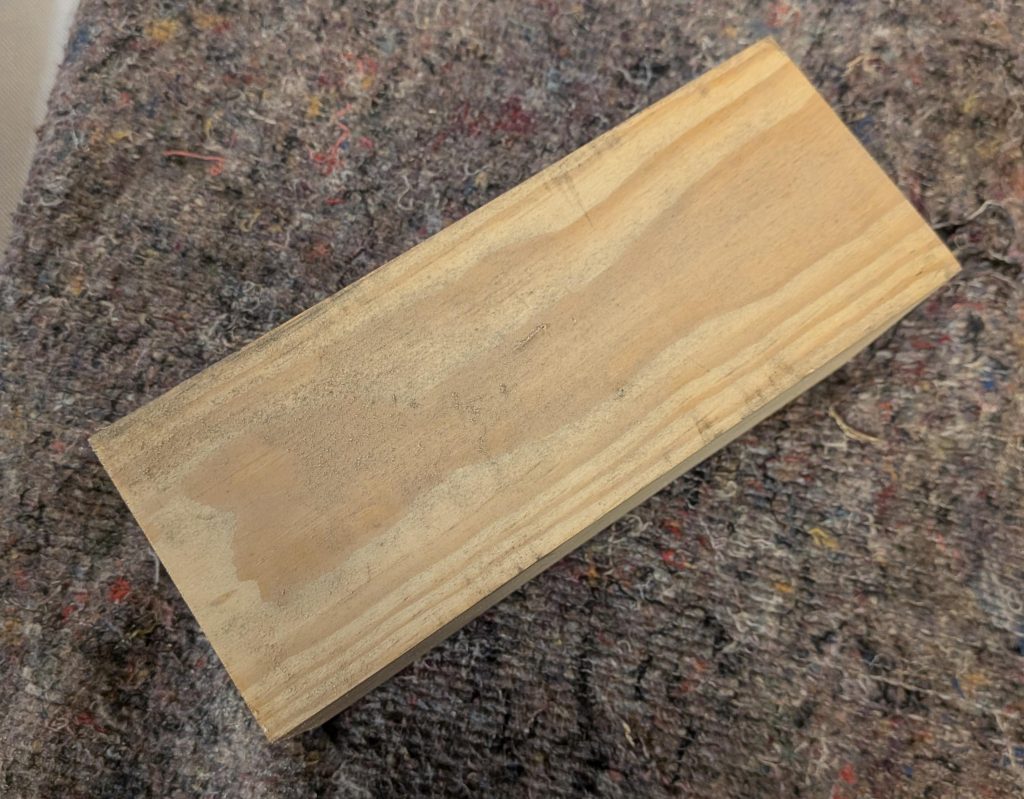
If the grain pattern looks perfectly mirrored or repeated across a wide surface, it’s often veneer.
3. Inspect the Underside or Inside
Turn the piece over or look inside drawers and cabinets.
If the interior surface looks completely different from the outside, there’s a good chance the outer surface is veneered. Solid wood pieces are usually more consistent throughout.
4. Watch for Lifting or Chips
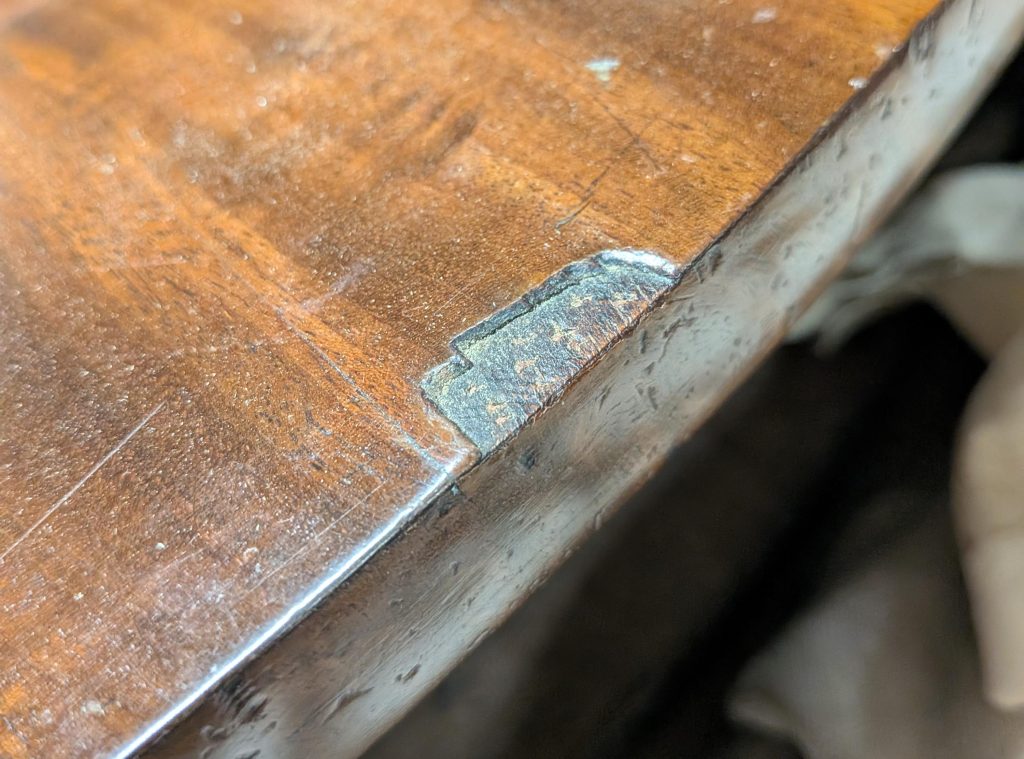
On older furniture, veneer sometimes shows small signs of lifting at corners or tiny chips that reveal a different material underneath. That exposed layer is the core beneath the veneer.
Why It Matters
The difference is important because veneer can only be sanded lightly. If you sand too aggressively, you can go right through it. Solid wood allows for more extensive refinishing and repair.
That’s why it’s always a good idea to identify what you’re working with before starting any DIY project.
If you’re unsure what you have, or if you have an antique piece that needs professional restoration then feel free to get in touch. We’re always happy to take a look and offer any help!
WQ Team
Leave a Reply